
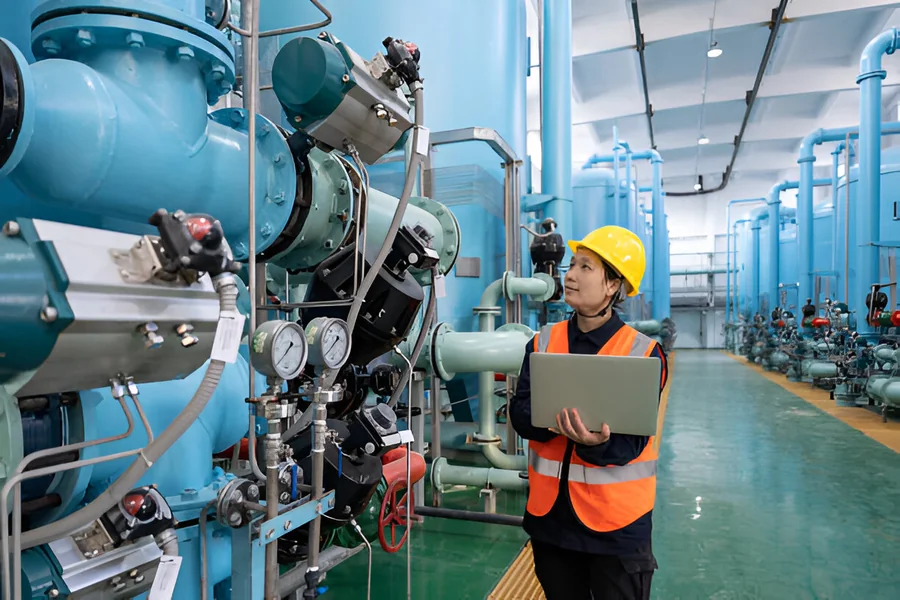
In manufacturing and production, efficiency isn’t just a goal—it’s a necessity. Whether assembling electronics, processing food, or working in heavy industries like automotive or aerospace, the tools and machinery you rely on can make or break your workflow. That’s where custom industrial equipment comes into play.
Rather than forcing your operations to adapt to generic machines, custom solutions are designed specifically for your needs. This article will explore industrial equipment, why it’s becoming increasingly essential, and how it can revolutionize your business operations.
What Is Custom Industrial Equipment?
Custom industrial equipment refers to machinery, tools, and systems designed and engineered for a specific process, product, or environment. Unlike off-the-shelf equipment that is mass-produced for general use, custom equipment is developed to align with the unique needs of a particular business or application. This can include:
- Custom conveyor systems
- Specialized robotic arms
- Tailored assembly line machinery
- Unique fixtures and enclosures
- Control panels designed for specific tasks
The goal is to enhance productivity, improve safety, and streamline operations in a way that traditional equipment often cannot achieve.
Why Choose Custom Over Standard Equipment?
Many businesses start with standard machines and quickly discover their limitations. When equipment doesn’t align perfectly with the job, it leads to inefficiencies, increased maintenance, and even safety risks. Here’s why such industrial equipment is often the smarter long-term investment:
-
Precision and Performance
Custom equipment is built around your specifications. This precision ensures that every part of your process—cutting, packaging, assembling, or transporting—is performed as efficiently and accurately as possible.
-
Boosted Productivity
When your tools work how you need them to, you eliminate unnecessary steps, reduce labor costs, and reduce wasted time. Custom solutions are optimized for speed and reliability, leading to smoother operations and higher output. kaiyo furniture
-
Enhanced Safety
Safety is a top priority in any industrial setting. Custom machines can be designed with specific safety features tailored to your facility and workforce, helping reduce the risk of accidents and ensuring compliance with regulatory standards.
-
Lower Long-Term Costs
Though custom solutions may have a higher upfront cost, they often save money in the long run. Custom equipment pays for itself with reduced downtime, fewer repairs, and better energy efficiency.
-
Flexibility and Scalability
Custom machines can be designed with future growth in mind. Whether you need to scale production or introduce new product lines, tailored equipment can be modified or expanded more easily than one-size-fits-all machinery.
Who Benefits Most from Custom Industrial Equipment?
Custom solutions can benefit almost any industry but are especially valuable in precision, complexity, and high-volume production sectors.
Industries that commonly use custom equipment:
- Food & Beverage Processing: For specialized packaging, temperature control, and contamination prevention.
- Automotive Manufacturing: For precision welding, parts assembly, and inspection.
- Pharmaceuticals & Healthcare: For cleanroom-compatible machinery and accurate dosing equipment.
- Electronics Production: For delicate handling of circuit boards and components.
- Aerospace & Defense: For advanced materials handling and intricate assembly processes.
It may be time to explore a custom-built solution if your business experiences frequent production issues, high labor costs, or inconsistent product quality.
The Custom Equipment Development Process
The journey to acquiring custom industrial equipment involves a few key steps:
Needs Assessment
Work with a specialist to identify where your current processes fall short. Define your challenges and goals.
Concept and Design
Engineers create a design tailored to your requirements, space constraints, and production goals.
Prototyping and Testing
To ensure functionality, a prototype may be built to test the equipment in a simulated or real environment.
Fabrication and Installation
Once finalized, the equipment is fabricated, installed at your facility, and integrated into your existing systems.
Training and Support
Your team receives training on how to use and maintain the equipment, with ongoing support available as needed.
Upgrade to Tailored Industrial Solutions
In an age where agility, efficiency, and quality define industrial success, relying solely on off-the-shelf machinery can hold you back. Custom industrial equipment gives you the power to create a production environment that works for your exact needs—not the other way around.
The benefits are clear, from improving safety to boosting output. If you want to elevate your operations, reduce waste, and stay competitive, it might be time to explore a custom solution tailored specifically for your business.
